


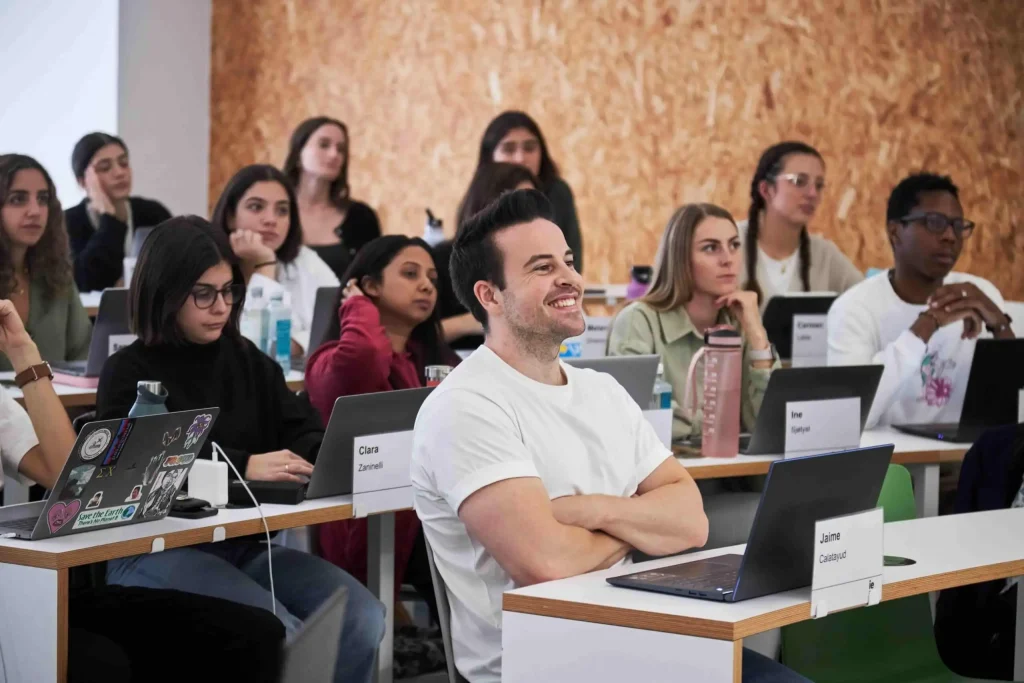
Picture a guest session at a university. The person running today’s session spent five years at a company like Bloomberg before launching their own firm, or they led growth at a startup that Squarespace eventually acquired. They have great credentials and an interesting presentation, but few students walk in with a plan for how to network with a guest speaker.
The talk goes for an hour. Then it ends, laptops close and most of the room heads for the door. Some students asked a question, few will be in touch with the guest a month later. And that missed connection could have made a huge difference in their career.
Many students treat a guest session like a class with a clear start and end. When the talk wraps, the mental checkbox gets marked complete and the person at the front of the room goes back to being someone they read or hear about.
The content the speaker is presenting obviously has value. But what’s missing from most participants’ experience is the conversion: turning a talk given to forty people into a working connection with the speaker. That takes more than just showing up, and it starts before the session begins.
Ten minutes of research gives you the background to recognize something interesting as the speaker says it, rather than after the session ends.
Start with the obvious sources: the speaker’s LinkedIn profile, their company’s About page, or a recent interview or article that mentions their work. Even a basic read on the industry or company they’re in gives you something to work with. Jotting down two or three details you want to ask about is enough to shape your approach to the session.
There’s an instinct to hold back on asking questions. People, especially students, may worry that raising a hand takes up time or attention that could go to someone else.

That instinct is sometimes right. A question that repeats what the speaker already covered, or one that’s really an attempt to sound smart rather than learn something, is better left unasked. Most of the time, though, a specific, genuine question is how you’ll be remembered by name later on.
If you can, ask a follow-up based on something the speaker just said. It shows you were listening and tends to elicit a more specific and interesting answer than a pre-rehearsed question.
If the format doesn’t leave room for questions, or a small crowd forms around the speaker afterward, don’t force your way to the front. Wait for a natural break, introduce yourself, ask the one question you want answered, have a short conversation and thank them.
Two minutes is plenty. Other students are usually waiting for the same opportunity, and a short but insightful exchange can leave a better impression than a long one.
Send a short message, most likely on LinkedIn, within 24 to 48 hours. Mention something specific from the session and don’t ask for anything.
In practice, that looks something like: “Thanks for the session today. The point about hiring for range over specialization stuck with me, since I’ve been trying to work out how narrow to go with my own internships. Really enjoyed it.”
If their profile doesn’t allow a direct message without connecting first, send the connection request with that note attached instead. Most people accept a request that references something specific from a talk they just gave.
If they don’t respond, leave it there. One thoughtful message is a fine opening move. Three unanswered follow-ups in a row feel like pressure.
If they do respond, keep the contact light and don’t force it. Only reach out again when you have a reason, whether that’s an article that connects to something they said, an update on your side that ties back to their industry or a note when you notice they’ve made a move.
Graduates rate connections above credentials. In Cengage Group’s 2025 Graduate Employability Report, personal referrals ranked as the most decisive factor in securing a job at 25%, followed by internships and prior work experience at 22% and interview skills at 20%. A referral has to come from somewhere, and it usually isn’t your closest circle.
A five-year study of more than 20 million LinkedIn users found that weak ties do more for job mobility than close contacts. The people you already know well tend to know the same things you do. A guest speaker has access to information and networks you don’t.
However, the researchers found the effect peaks with moderately weak ties, not the weakest ones. Someone you sat in a room with once and never spoke to again is about as weak as a tie gets, and that’s the category that did least for people’s careers. The follow-up message is what can move the relationship out of that bucket.
That’s also why no single connection is going to land you a job on its own. The value comes from having several. A student who follows this blueprint over a handful of sessions in a semester ends up with a small but potentially powerful network spanning different companies and industries.
What comes out of it varies. It might be a reference, a piece of insight that saves months of guessing or, further down the line, an opportunity you’d never have heard about otherwise.

Where you study affects how often these opportunities come up. Building professional connections in New York has an advantage: the people running these sessions work a subway ride away, so the speaker in your classroom on Tuesday is someone you might plausibly cross paths with again.
IE New York College builds its masterclasses and guest sessions around access to professionals. See what that looks like and how it can impact your career in our master’s programs.
Research them briefly beforehand, ask one specific question during or after the session, then follow up on LinkedIn within 48 hours referencing something they said. The follow-up is the step most students skip.
Within 24 to 48 hours, while the conversation is still fresh. A short, specific message beats a generic one.
Name the one moment that stuck, say why it landed for you, then stop. Something like: “Your point about leaving agency work for an in-house team has been on my mind since Tuesday. I’d assumed the trade-off ran the other way. Thanks for the great session.” Avoid making any particular request or attaching your resume.
Send a connection request with a short note attached instead. LinkedIn allows a brief note even without being connected first, and referencing something specific from the talk usually gets it accepted.
Approach the speaker afterward during a natural break. Keep it to a couple of minutes, especially if other students are waiting for the same window.
Rarely on its own. Research on weak ties suggests the value comes from building several of these across a program, not from any single one working out.