


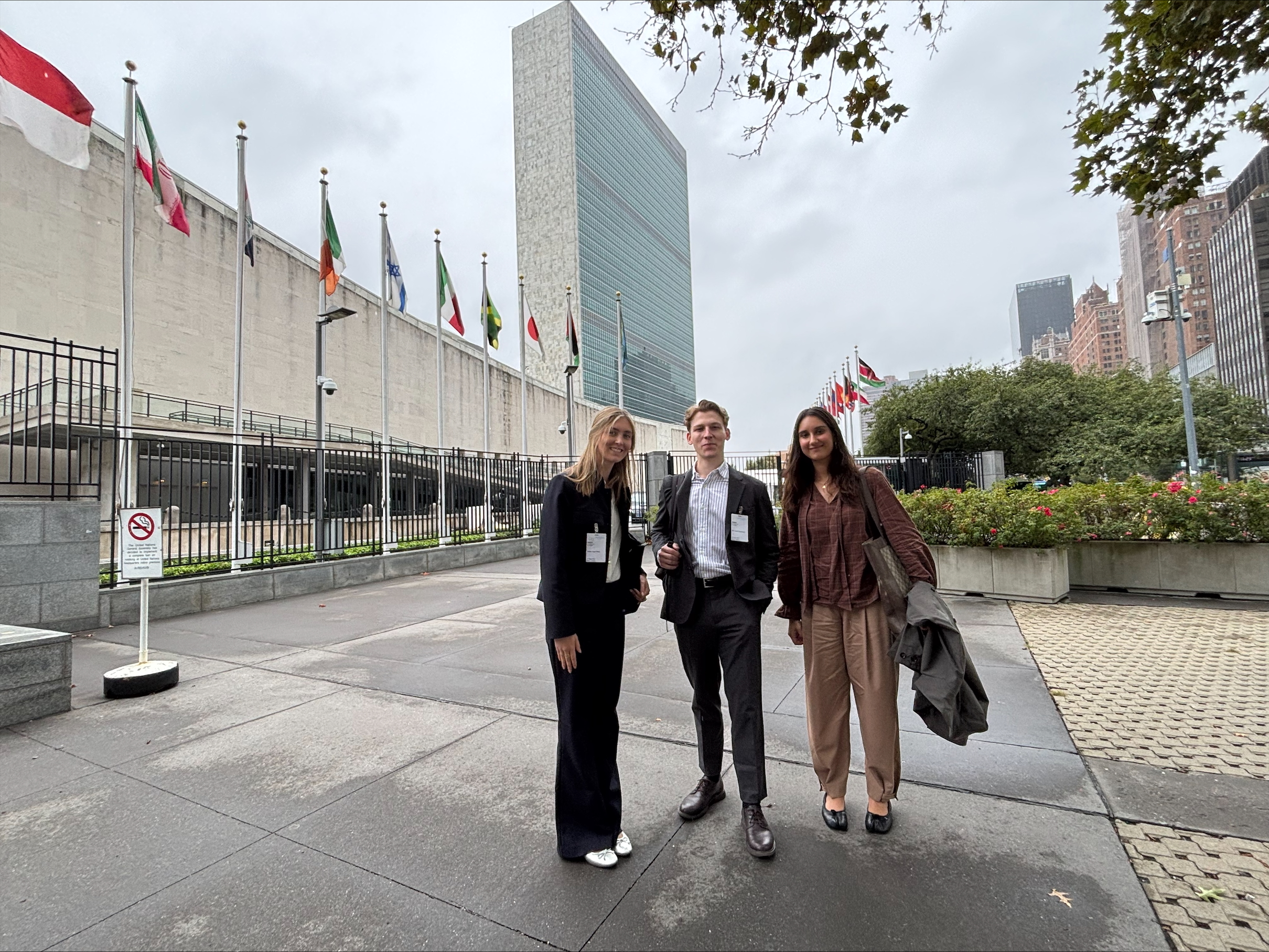
For IENYC students Max Jacob Montfrooij, Sophie Angel Blum, and Ana Huerta Pastrana, collaborating with the United Nations Secretariat during their capstone project offered a rare, behind-the-scenes look at how global organizations learn, evolve, and lead.
As students in the Master in Global Business and Sustainability , their task was to evaluate how the UN supports staff learning and skills development as part of its UN 2.0 vision. What they discovered went beyond strategy. It revealed the human side of leadership inside a global institution.
UN 2.0 is a future-focused vision launched by UN Secretary-General António Guterres to modernize the United Nations and make it more agile, innovative, and effective in a fast-changing world. At its core is the Quintet of Change: five skill areas the UN is strengthening across the organization to better deliver on the Sustainable Development Goals (SDGs).

The five skill areas are:
In a nutshell, UN 2.0 is all about revolutionizing how the organization thinks, learns, and collaborates to create greater impact for people and the planet.
Key Goals of UN 2.0:
The capstone project involved a strategic review of the United Nations Secretariat’s Learning Strategy, focusing on how learning and skills development function across a large, complex, and global organization.
Positioned within the UN 2.0 vision, Ana, Max, and Sophie’s work examined how the organization is evolving to become more future-ready, data-driven, and innovative by strengthening its learning culture and capabilities.
The project assessed what enables effective learning at scale, where structural and cultural barriers exist, and how learning can become more consistent, accessible, and impactful across departments and regions – supporting both staff development and the UN’s broader mission to deliver on the Sustainable Development Goals.
Their analysis focused on four key areas:
As Ana reflects:
“This project made us realize that learning isn’t just about knowledge. It’s about empowerment. When organizations invest in learning, they invest in people’s ability to drive change.”
One of the first lessons was patience.
Large organizations don’t transform overnight. Change happens gradually, shaped by governance structures, accountability, and culture.
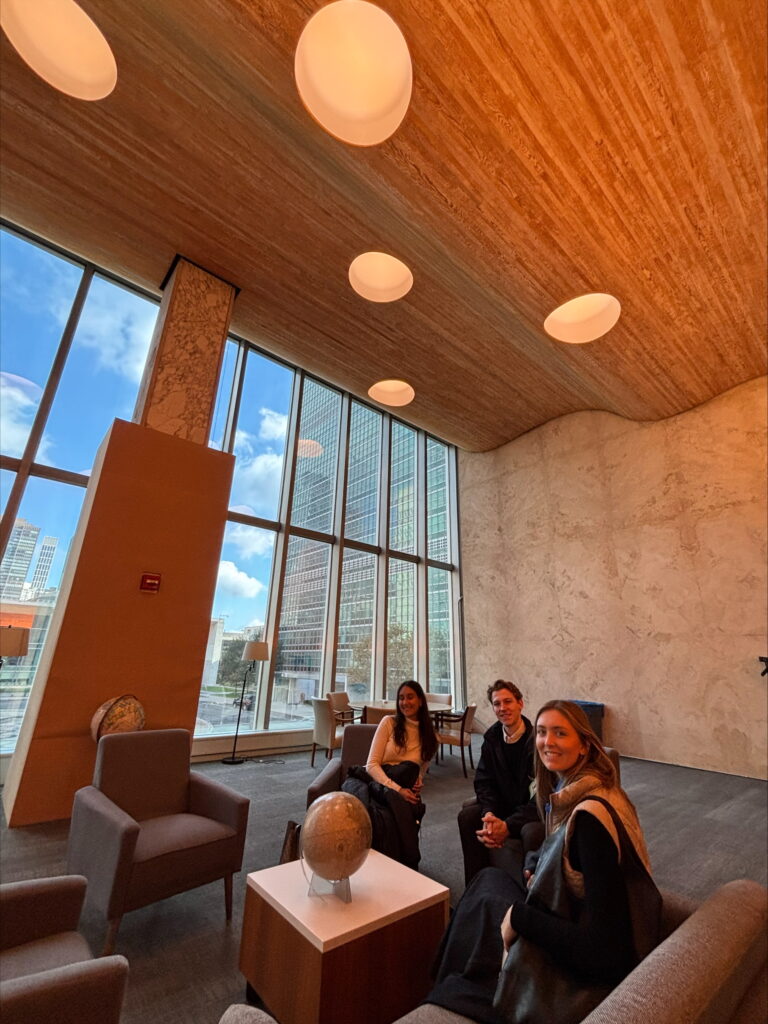
Instead of reading about transformation in theory, the team examined real learning platforms, coordination challenges, and institutional dynamics that affect how more than 30,000 staff members grow.
“We realized how much effort it takes for an organization of this size to align learning with purpose,” Ana shares. “It’s about empowering people, not just changing systems.”
That insight shifted their understanding of leadership, learning by experience how progress depends less on policies alone and more on whether people feel supported, equipped, and motivated to learn.
As Max explained, “The UN is rethinking how it learns and evolves as an organization. It’s about transforming not just systems but culture, and it was amazing to be a part of that reflection process.”
Working with the UN meant operating in a truly global rhythm. Different time zones, communication styles, and cultural norms required the team to be intentional about how they listened, clarified ideas, and aligned expectations.
Max reflects: “We had to learn how to communicate in a global context, where every word carries different meaning depending on where you’re from.”
Success in the capstone project and contributing to the learning strategy at the UN didn’t just involve teamwork. Rather, it was global collaboration in motion, where empathy and adaptability matter just as much as expertise.
A central part of the project involved understanding how learning connects to impact.
Through research and analysis, the students explored how behavioral science, foresight, and innovation shape decision-making inside the UN. And so they began to see how learning becomes meaningful when it’s embedded into everyday work rather than treated as a checkbox.
“It wasn’t just about learning strategy,” Sophie explains. “It was about how learning can create change for people, for the planet, for the future.”
That connection between purpose and practice reshaped how they think about leadership in a large and meaningful organization like the United Nations.

There was no playbook for this project. The team navigated ambiguity, evolving expectations, and real-world constraints. This is the IENYC model in action: learning by doing, adjusting in real time, and taking responsibility for outcomes.
“It felt like we were inside a real consultancy,” Ana says. “Every week was about refining ideas, managing expectations, and learning how to lead through uncertainty.”
The experience strengthened not only technical skills, but resilience, grit, self-awareness, and confidence.
By the end of the UN capstone, Ana, Max, and Sophie understood global leadership more clearly and walked away with a key insight: leadership starts with people. Throughout the hands-on project, they even began to see themselves ad emerging leaders. The capstone experience at IENYC pushed them beyond theory into real responsibility, where confidence was built through uncertainty and purpose came from positive impact.
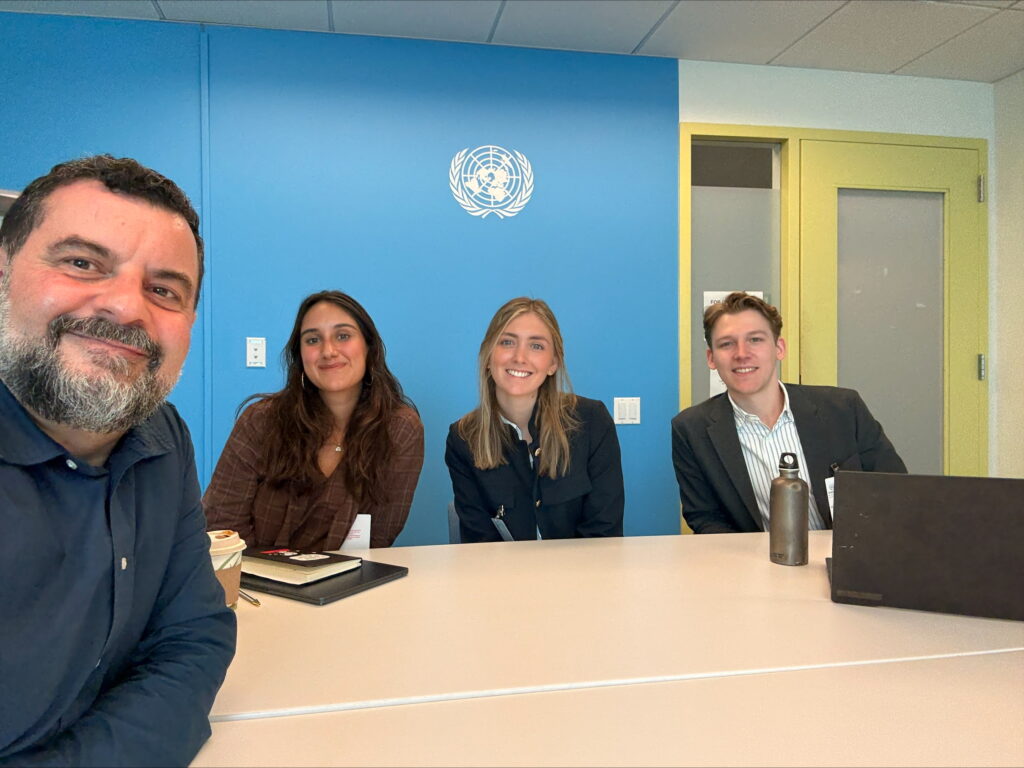
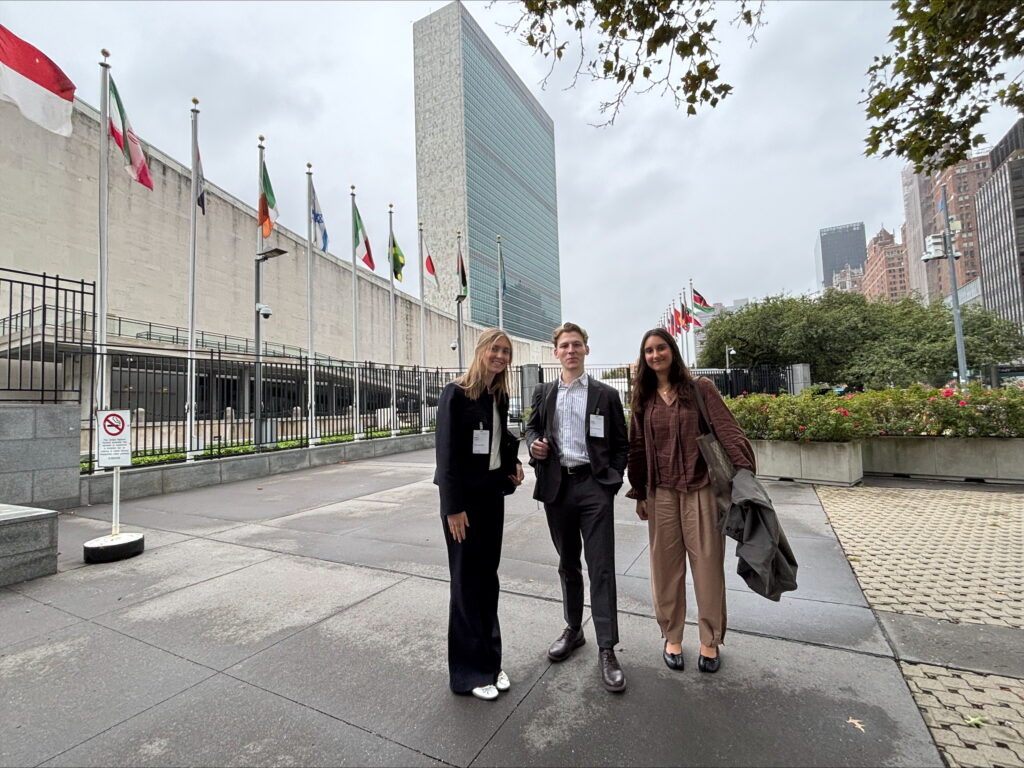
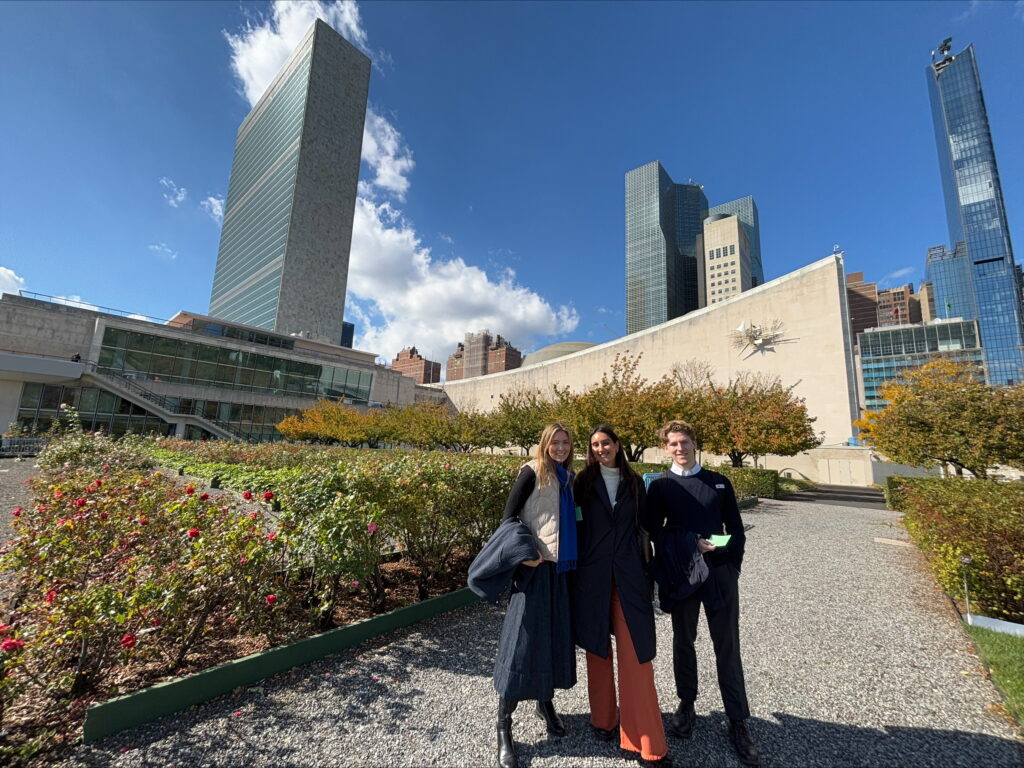
“This was the most real project we’ve done so far,” Sophie reflected. “We weren’t just analyzing theory; we were contributing to something that could actually improve how an organization like the UN learns and operates.”
Ana captured the personal growth behind that work: “I learned that growth happens in discomfort. There were moments where we didn’t have clear answers, and that forced us to think critically and work together creatively.”
And for Max, the takeaway was lasting: “Progress can be slow, but it’s possible, and our generation has a role to play in making it real.”
Together, their reflections underscore the core lesson of the experience: global leadership starts with people, is shaped through collaboration, and is learned by doing; exactly the mindset, and skill set, IENYC prepares its students to carry into the world.
Ready to make your next move? Discover more about what IENYC has to offer here.