


Working at the United Nations means operating inside a system where global politics, data, human behavior, and urgency all collide. It’s not enough to be intelligent or motivated. You need just the right skills to move through uncertainty, work across cultures, and turn complexity into action.
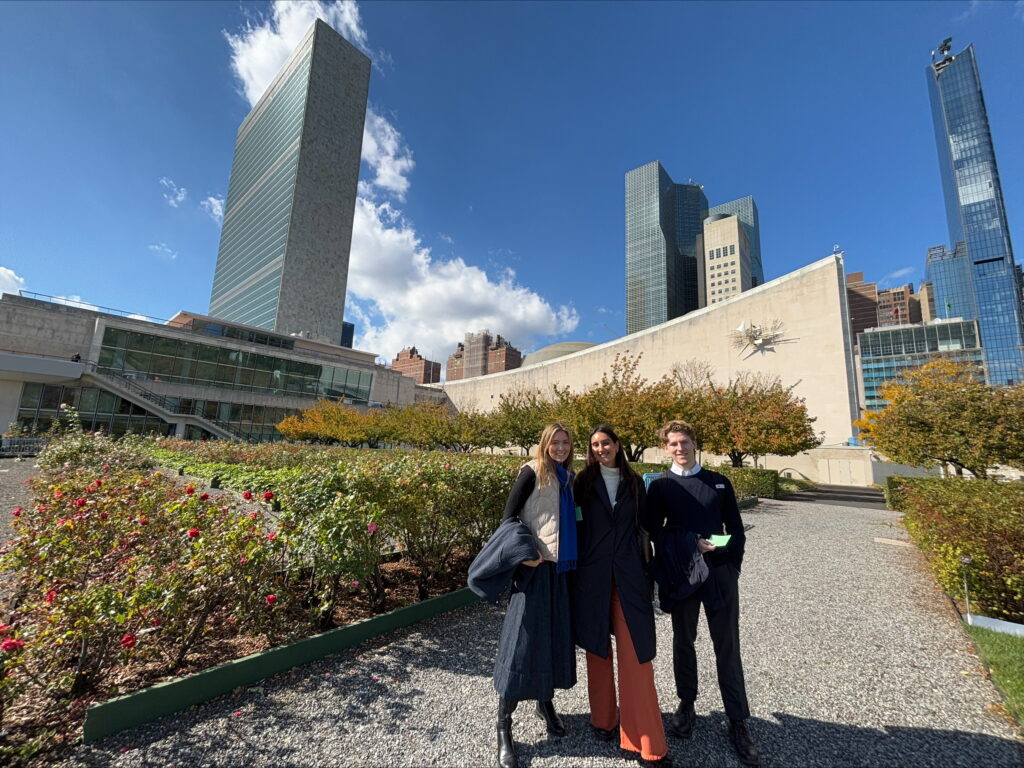
That is exactly what a team of IENYC students experienced during their capstone project with the United Nations Secretariat. Max Jacob Montfrooij, Sophie Angel Blum, Ana Huerta Pastrana, all studying the Master in Global Business and Sustainability, analyzed how the UN supports learning, skills development, and professional growth across more than 30,000 staff members worldwide as part of the organization’s UN 2.0 transformation.
The team had the unique opportunity to contribute to a live strategic review of how the United Nations learns and adapts. As Sophie said, “We weren’t just analyzing theory. We were contributing to something that could actually affect how an organization like the United Nations learns and operates.”
What they gained from this experience reflects the exact skills the UN looks for in the people who aspire to work there.
The skills below – we could even call them operating system of modern global leadership – are drawn from the UN and SAP 21st Century Skills framework. It defines the capabilities needed to work in complex global organizations. The framework emphasizes that institutions like the United Nations depend on people who can think critically, collaborate across difference, and use data, technology, and human insight to create real-world impact.
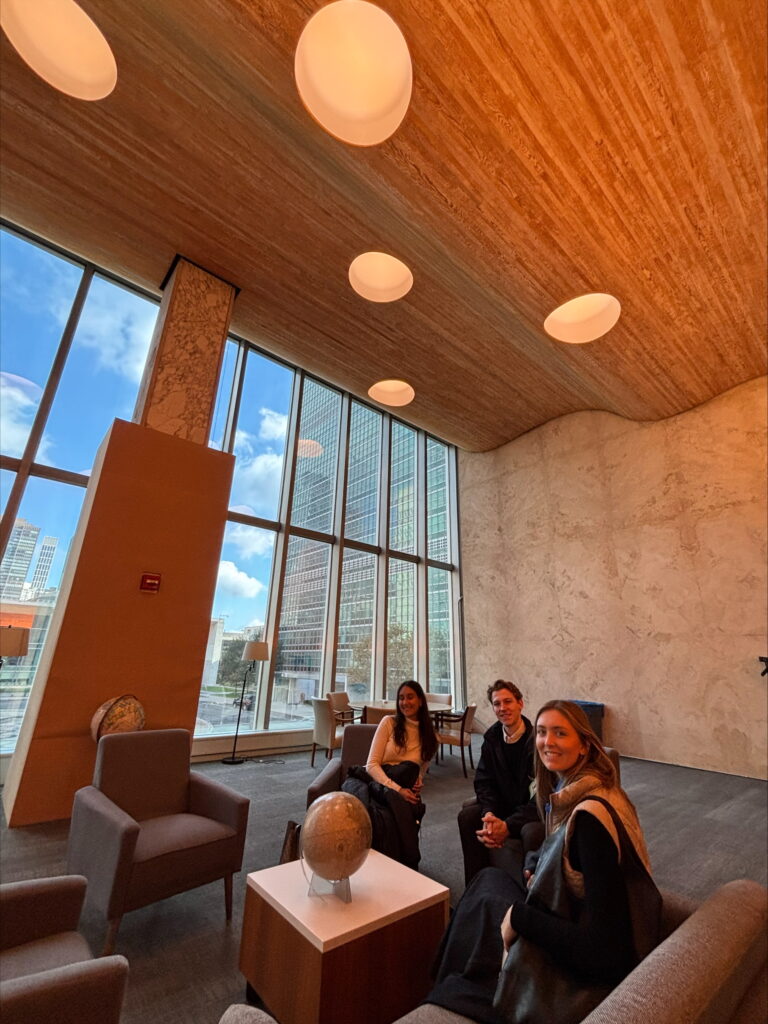
These are the same skills Ana, Max and Sophie had the opportunity to practice and implement each day inside their capstone project collaborating with the UN.
The capstone project focused on the UN Secretariat’s Learning Strategy. The students were asked to understand how learning actually works across the organization and where it breaks down. They examined aspects such as governance structures, digital platforms, participation data, and how learning impact is measured. They also identified barriers such as time, fragmented systems, and implementation styles across departments.
Max described the experience as learning how theory meets reality: “It helped us connect academic frameworks with real human systems.”
Instead of tidy case studies, they were dealing with the complexity of a 30,000-person organization trying to evolve. That kind of critical thinking is exactly what United Nations professionals rely on when navigating global systems.
Working with the United Nations meant working in a global rhythm. Different departments, regions, and professional cultures shaped how communication and decision-making happened.
The students had to learn how to align expectations, clarify meaning, and listen carefully in a space where misinterpretation has the potential to slow things down.
As Max put it, “We had to learn how to communicate in a global context, where every word carries different meaning depending on where you’re from.”
As the saying goes, teamwork is dreamwork. In this case, however, it went far beyond just teamwork. It was the same cross-cultural collaboration that defines daily life inside the United Nations.
The team did not simply submit a report. They presented their insights and recommendations to professionals responsible for shaping how learning works across the United Nations. That meant structuring arguments, backing them with evidence, and translating complexity into clarity.
Sophie said the experience gave their work weight: “It gave us a sense of purpose. We were doing work that could help improve how the UN develops its people. That’s not just business, that’s impact.”
This is exactly how communication functions inside global organizations. Because ideas only matter when they can be understood and acted on.

The UN 2.0 vision centers on data, digital tools, innovation, foresight, and behavioral science. Through their capstone project, the Ana, Max and Sophie experienced firsthand how learning platforms, tracking systems, and data shape who gets access to development and how success is measured.
They discovered that while participation is tracked, outcomes are not always measured consistently, and learning platforms are spread across multiple systems.
This showed them that digital infrastructure is not neutral. It determines what people can access and how growth is understood. For the UN, that makes digital and data fluency a core leadership skill.
The project did not follow a script. Priorities shifted, information was incomplete, and expectations evolved as the team learned more.
Sophie called it the most real project she had ever done because nothing was neatly packaged – just like the real world. The team had to keep adjusting and refining their work as new insights emerged.
That ability to adapt is a skill professionals at the United Nations use every day when responding to political change, humanitarian crises, and evolving global needs. Because in real life, there are no playbooks.

Ana reflected one one of the biggest lessons about learning. “Learning isn’t just about knowledge. It’s about empowerment. When organizations invest in learning, they invest in people’s ability to drive change.”
The IENYC students saw that even the strongest strategy fails if people do not feel supported, trusted, and capable. That understanding sits at the heart of ethical leadership in global institutions.
By the end of the capstone project, thanks to their role collaborating to boost the UN’s Learning Strategy, Ana, Max and Sophie came to know firsthand exactly what it means to operate inside a global organization in order to develop the grit, know-how, and resilience to further their career goals.
For example, they learned how to think critically, collaborate across cultures, communicate with impact, work with data, adapt under pressure, and lead with purpose.
Ana summed it up best when she said, “It felt like we were doing real consulting work, not just a simulation.”
That is what being ready for the United Nations actually looks like. Those are the skills you need to bring to the table. And it is exactly what this capstone project at IENYC gave them.
Interested in living an experience like this one? Learn more about IE New York College here.