



There are around 10 million social enterprises worldwide. Together, they generate about $2 trillion annually and employ nearly 200 million people. Half are led by women, compared with one in five conventional businesses.
That’s a bigger slice of the economy than most people realize, and it’s growing.
Social entrepreneurship is the practice of building a business around a social or environmental problem and funding that work primarily through what the business sells, rather than through donations. The cause comes first. Product, pricing and hiring decisions follow from it.
Social enterprises work on everything from education and climate action to clean energy and poverty. Because customers cover most of the costs, a social enterprise can grow its impact by growing its sales.
Many social enterprises map their work to the UN’s Sustainable Development Goals (SDGs), 17 global targets for 2030 that cover issues like poverty, health and climate. Using the SDGs provides a company with a common framework for setting and reporting impact goals.
It also helps with fundraising. Impact investors, who fund companies for both financial returns and measurable social or environmental outcomes, use the SDGs as a standard for comparing one venture with another.
Social enterprises vary in structure, but most follow one of three models.
Each model has trade-offs, but for-profit social enterprises tend to scale fastest. They can raise money from impact investors and grow revenue instead of waiting on grant cycles. The catch is that investors expect returns, so leaders must balance between profit and purpose in the business model from day one.
B Corp certification shows that a for-profit company has met independently verified standards for its social and environmental performance, across areas from climate action to human rights. The nonprofit B Lab awards it, and more than 10,000 companies on six continents now have it. Companies applying since 2026 certify against a tougher, overhauled version of the standards.
Greyston Bakery follows a hybrid model. It’s a for-profit commercial bakery owned by the nonprofit Greyston Foundation. Zen teacher Bernie Glassman opened it in 1982 in Yonkers, just north of New York City, to create jobs in a struggling neighborhood.
The bakery runs on Open Hiring. For entry-level roles, there are no résumés, interviews or background checks. People sign up and are hired in order as positions open. That gives steady work to people who are usually screened out, such as those with an arrest record, unstable housing or little formal education.
Many job programs for people facing those barriers depend on grants. At Greyston, brownie sales to ice cream makers, grocery retailers and corporate gift buyers keep the jobs going. Greyston was also New York’s first registered benefit corporation, and the bakery has been a certified B Corp since 2008.
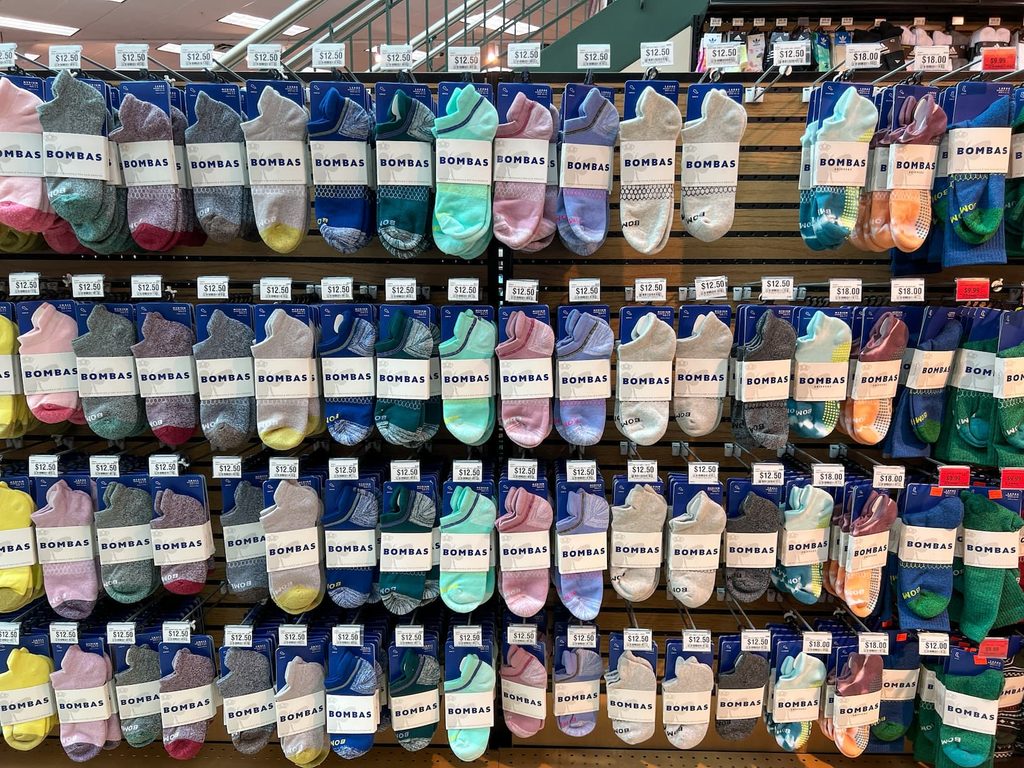
Bombas started in New York in 2013, after founders Randy Goldberg and David Heath learned that socks are the most requested clothing item in homeless shelters. The company sells socks and apparel and donates an item for every one sold. It’s a certified B Corp.
Customer purchases have powered more than 200 million donations. They’re distributed through over 4,000 Giving Partners, the shelters and community organizations that hand out the items.
Bombas designs the donated products for the people receiving them, with tougher construction, antimicrobial yarns and darker colors that show less wear. When partners reported that underwear and T-shirts were the next most-requested items, Bombas started making them too.
Kickstarter shows what the for-profit route looks like when a company writes its values into law. The Brooklyn crowdfunding platform, launched in 2009, lets artists, designers and inventors raise money directly from the people who want to see their projects made.
In 2015, Kickstarter became a public benefit corporation. Its charter commits the company to always supporting artists and to donating 5% of its post-tax profits to arts education and organizations fighting inequality.
Kickstarter also publishes an annual benefit statement reporting how well it met those commitments. That gives creators, customers and staff a public record they can hold the company to.
Emma’s Torch shows the nonprofit model at a more local scale. Kerry Brodie left a career in public policy, went to culinary school in New York and founded it in 2016. The name comes from Emma Lazarus, whose poem is inscribed on the Statue of Liberty.
Refugees, asylum seekers and survivors of human trafficking train in its kitchens for restaurant jobs. They both earn wages and take English classes while training. Most graduates go on to work as prep cooks, line cooks, bakers or baristas. The classroom café in Red Hook and a catering business sell to paying customers. That revenue helps fund the training.
You don’t have to found a company to work in this field. Mission-driven businesses need people who can price products, manage supply chains, measure impact and pitch to investors. The same jobs exist at impact investment funds and at large corporations that buy from or partner with them.
What those roles share is commercial thinking applied to a social goal: designing a business so that the more it sells, the more good it does. Managers increasingly value that kind of entrepreneurial mindset in roles well beyond startups.
New York is a great place to learn it firsthand. The MS in Global Business and Sustainability at IENYC has you applying ESG frameworks and sustainability strategy on consulting projects for New York companies, so you’re working through these trade-offs with real businesses before you graduate.
A social enterprise funds its mission primarily by selling products or services, whereas a traditional nonprofit relies primarily on donations and grants. Some nonprofits run social enterprises, such as cafés or catering businesses, so the line isn’t always clear-cut.
Social enterprises make money by selling products or services at a price that covers their costs. The difference between them and a standard business is that the social mission is built into what they sell or how they make it.
No. A B Corp certification from the nonprofit B Lab measures a company’s social and environmental performance, while a social enterprise wants to solve a social or environmental problem. Some B Corps are conventional companies with strong practices, such as Athleta and Danone North America.
Starting a social enterprise begins with a specific cause and a revenue model that addresses it directly. Founders then choose a legal structure (for-profit, nonprofit or hybrid), decide how to measure impact and test whether customers will pay. Many start small before scaling up.