

New York is famous for its energetic pace. But some days you just need a good coffee and a quiet corner to get through your work.
That’s where SoHo’s cafés come in. While the neighborhood is best known for designer boutiques and art galleries, tucked between them are cafés where you can open your laptop and get your caffeine hit at the same time.
That’s less of a given than it used to be. In 2025, Axios reported that coffee shops across the US were switching off Wi-Fi, taping over outlets or banning laptops. The cafés below are the SoHo spots that still welcome you to stay and work.
The Lost Draft was built for film and TV writers. There are director’s chairs at the bar, old movies projected on the wall and a green mailbox where you can drop off script and story ideas.
It’s also one of the most reliable places in SoHo to get work done. The Wi-Fi is free, there are outlets under the seats along the wall and there’s a small booth for phone calls. The café has its own house blends and makes its own syrups. They offer creative lattes in flavors including honey rose, sesame and cookie butter.
Stone Street’s biggest selling point is out back. The café has a garden where you can set up and work, which is rare in SoHo. Inside, there’s plenty of space, with couches, a community table and big windows. The Wi-Fi is strong and dependable, and there are plenty of outlets.
Stone Street roasts its own coffee and also serves specialty matchas and nonalcoholic spritzes. In addition to well-loved pastries, they have strong food options including avocado toast, breakfast burritos, pancakes, sandwiches and salads.
Café Lyria takes its Hellenic theme seriously. There are Greek plants and sculptures around the room, and Hercules plays on loop on a vintage TV.
The menu follows suit. The freddo cappuccino is a staple in Greek cafés: iced espresso topped with a thick layer of cold, frothed milk. The signature Lyria is an iced latte made with oat milk and honey. To go with it, there are homemade Greek pastries, including olive oil cookies and almond croissants.
Free Wi-Fi and a large seating area make it a good place to work, and you’ll see plenty of laptops out on a weekday.
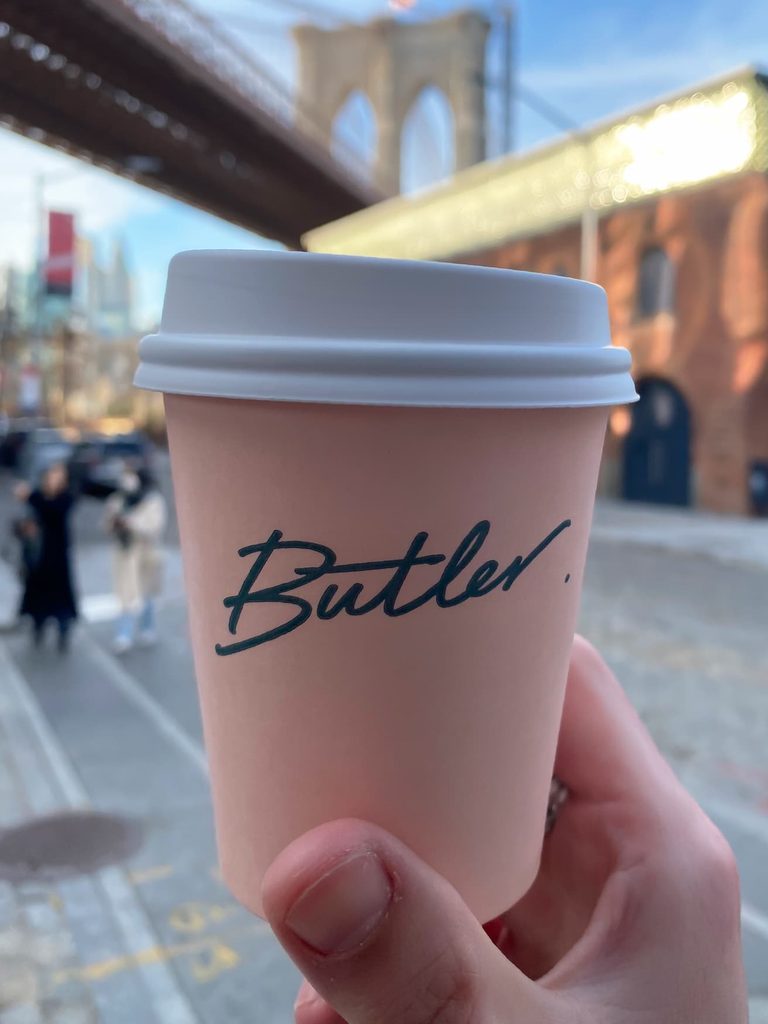
At Butler, the food is as much of a draw as the coffee. The breakfast sandwiches and yogurt bowls get plenty of praise, and the avocado toast is a regular favorite, topped with salted ricotta, shishito peppers, pistachios and pomegranate on sourdough. To drink, go for the cold brew, which regulars rate highly.
The room is bright, with big windows, square tables and two large tables for groups, plus outdoor seating and free Wi-Fi.
Capital One Café may be a café run by a bank, but it’s one of the easiest places in SoHo to spend hours working. There’s free Wi-Fi, plenty of seating and outlets and lots of restrooms. A majority of customers are working at any given time.
In addition to a standard coffee menu, the café offers seasonal sips, pastries and bigger bites like avocado toast and club sandwiches. While Capital One customers get a 50% discount at the café, anyone can go there.
787 Coffee on Thompson Street serves Puerto Rican coffee grown on the company’s own farm, and it’s known for its coquito latte. It’s small, but it offers free Wi-Fi and outlets.
Citizens of Soho on Lafayette Street is more of a brunch restaurant than a coffee shop, but it has free Wi-Fi and plenty of outlets, and weekday mornings are calm enough to work. Skip it on weekends, when brunch takes over.
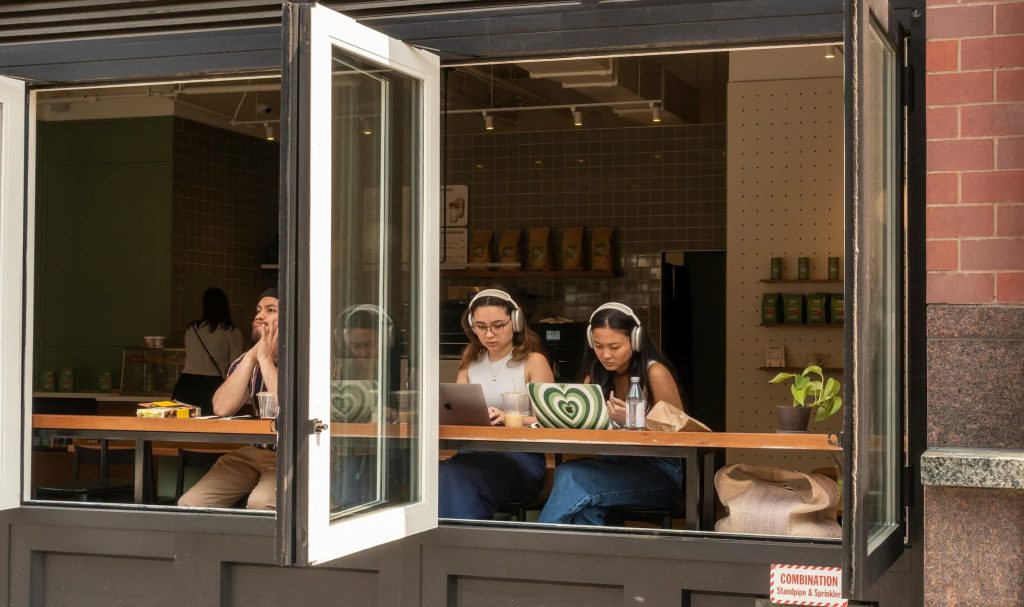
Demand for a good cup isn’t going anywhere. In 2025, 46% of American adults had specialty coffee in the past day, according to the National Coffee Association, and the best seats in SoHo go quickly.
Being a good guest helps keep these cafés laptop-friendly. If you’re staying for a few hours, order something every so often. And if you’re working solo, leave the bigger tables for groups. If everywhere in SoHo is full, Tribeca’s study cafés are a ten-minute walk south.
Every café on this list is a short walk from IENYC on Wooster Street, where the city is part of the curriculum. Explore IENYC’s master’s programs and pick your next study spot.
Most coffee shops don’t post a formal time limit, but some New York cafés cap seating or Wi-Fi when they’re busy. The Lost Draft in SoHo, for example, sets a seating limit at peak times. Ordering again is the simplest way to stay longer, but when the café is full, give up your table once you’re done.
Coffee shops are banning laptops and cutting Wi-Fi because remote workers can hold tables for hours, leading to overcrowding, lower sales and a weaker sense of community, according to Axios. Some cafés tape over outlets or limit Wi-Fi time instead of banning laptops outright.
Working on a laptop in a coffee shop isn’t rude if the café welcomes laptops and you act like a paying guest. Keep calls short or take them outside, and use headphones for anything with sound. At busy times, don’t leave your things on a table to save it while you step out.
SoHo is served by Prince Street on the R and W, two Spring Street stations (one on the C and E, one on the 6) and Broadway-Lafayette on the B, D, F and M. Canal Street, on SoHo’s southern edge, is also within walking distance of most of the neighborhood’s cafés.