

More than 503,000 students attend New York City’s 100-plus colleges and universities, according to a 2024 report. One of the first big decisions when moving here to study is where to live.
The right neighborhood for you depends on your budget, your commute and how you want to spend your time outside class. IENYC is in SoHo. From there, most of Manhattan and large parts of Brooklyn and Queens are a subway ride away.
This guide to the best NYC neighborhoods for students covers seven areas worth considering.
Vibe: Lively and down-to-earth
Best for: Night owls and students who want to walk to class
Time to IENYC: 10–20 minutes by subway or 20–30 minutes on foot
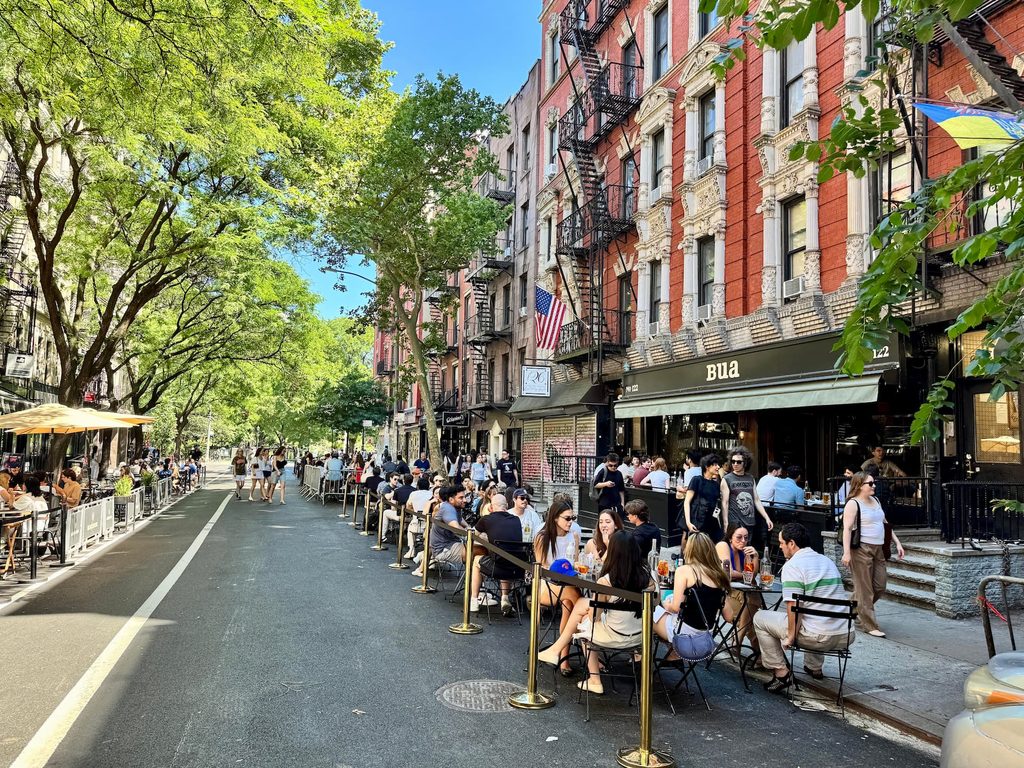
The East Village is about as close to a student neighborhood as Manhattan gets. Tompkins Square Park works as the local backyard, with a dog run and a Sunday farmer’s market.
St. Marks Place and the blocks around it are packed with cheap late-night food, from ramen counters to dumpling shops. Further east, Alphabet City has community gardens tucked between apartment buildings. Most housing is older, so expect stairs and compact rooms.
Vibe: Artsy and central
Best for: Gallery-hoppers and food lovers
Time to IENYC: 15–25 minutes by subway or 25–40 minutes on foot
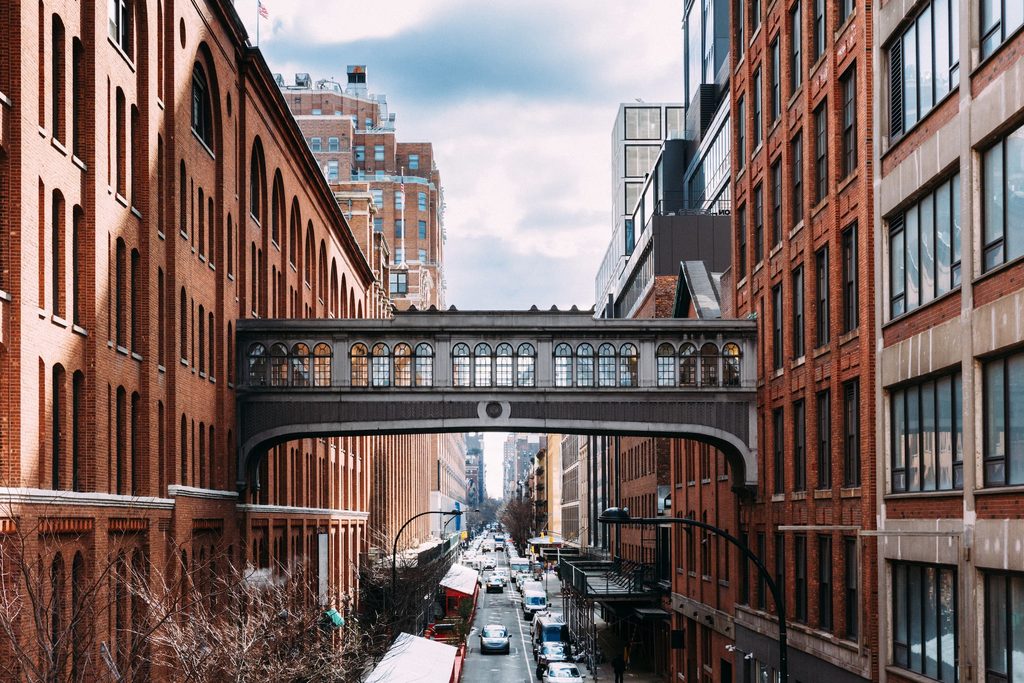
Chelsea and the Flatiron District sit side by side just north of Greenwich Village, with Chelsea to the west and Flatiron to the east. They’re close enough that many New Yorkers treat them as one area.
Chelsea’s gallery district runs west of Tenth Avenue. The High Line, a park built on an old elevated railway, passes overhead. The Flatiron District, named after the Flatiron Building, mixes historic architecture with coworking spaces and cafés. On weekends, you can wander through Chelsea Market, read in Madison Square Park or head to a gallery opening.
Vibe: Trendy and independent
Best for: Creatives, coffee and vintage lovers
Time to IENYC: 20–30 minutes by subway
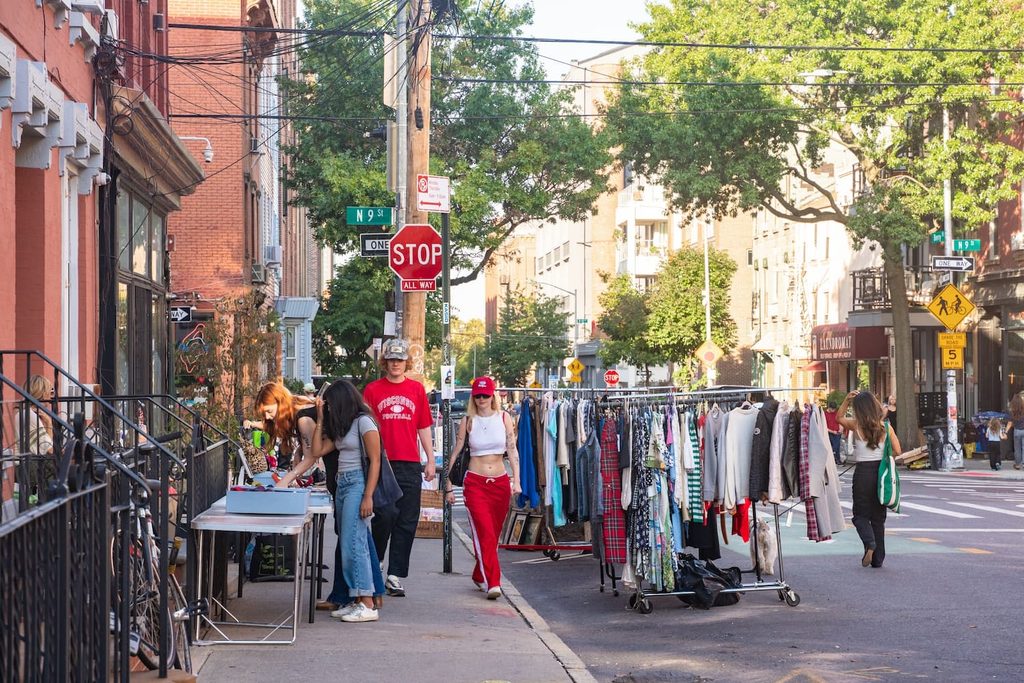
Williamsburg, just across the East River in Brooklyn, is one of the most popular NYC neighborhoods for people in their 20s. Weekends here run from long brunches to late nights at rooftop bars.
Bedford Avenue and the surrounding streets are packed with independent coffee shops and vintage stores, plus music venues that keep the neighborhood busy late into the night. Domino Park on the East River has spectacular views of the Manhattan skyline.
Vibe: Modern and waterfront
Best for: Students who want newer buildings and a fast ride into Manhattan
Time to IENYC: 25–35 minutes by subway
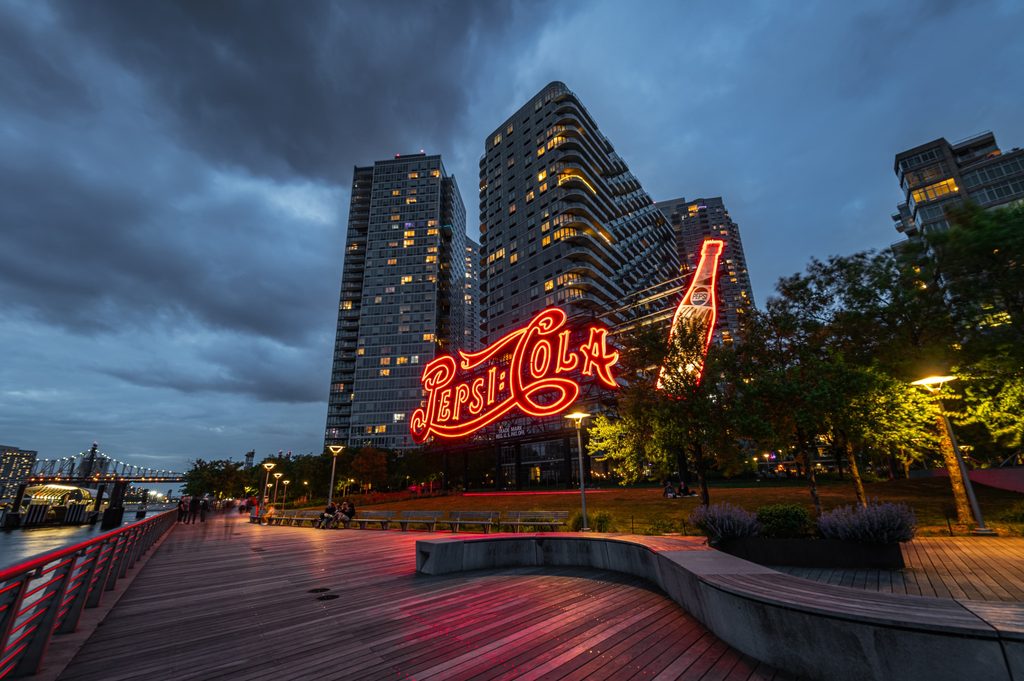
Despite its name, Long Island City is a neighborhood in Queens, not a separate city. It’s grown quickly over the past two decades, and rental towers now line the waterfront and the streets around Court Square.
Many newer buildings have gyms and laundry rooms, which plenty of older buildings lack. Gantry Plaza State Park looks straight across at the Midtown skyline, and MoMA PS1 brings contemporary art to the neighborhood.
Vibe: Neighborly and international
Best for: Food lovers and students watching their budget
Time to IENYC: 30–40 minutes by subway
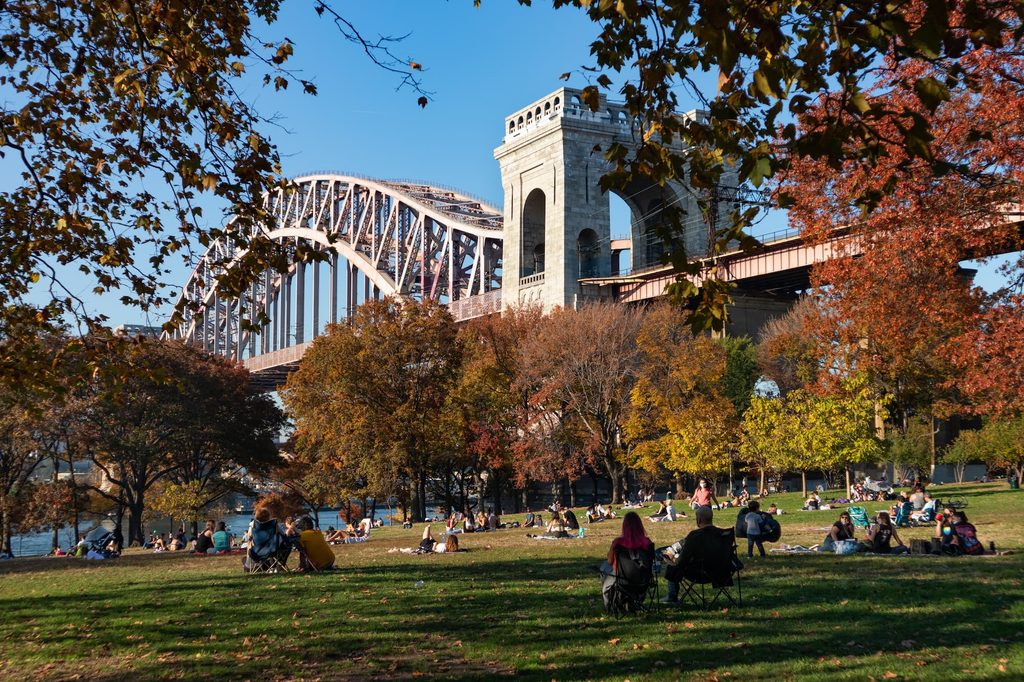
Astoria is different from the other neighborhoods here. It’s a residential neighborhood of low-rise apartment buildings and two-family houses, where students live alongside families and longtime residents. The pace is calmer, and daily life centers on local shops and restaurants more than nightlife.
The neighborhood is extremely international and is famous for its Greek and Egyptian communities and restaurants. Astoria Park is a favorite spot on summer evenings, and the Museum of the Moving Image draws film and TV fans. Rents tend to be lower than in Manhattan or Brooklyn.
Vibe: Cultural and relaxed
Best for: Theater lovers and runners
Time to IENYC: 30–40 minutes by subway
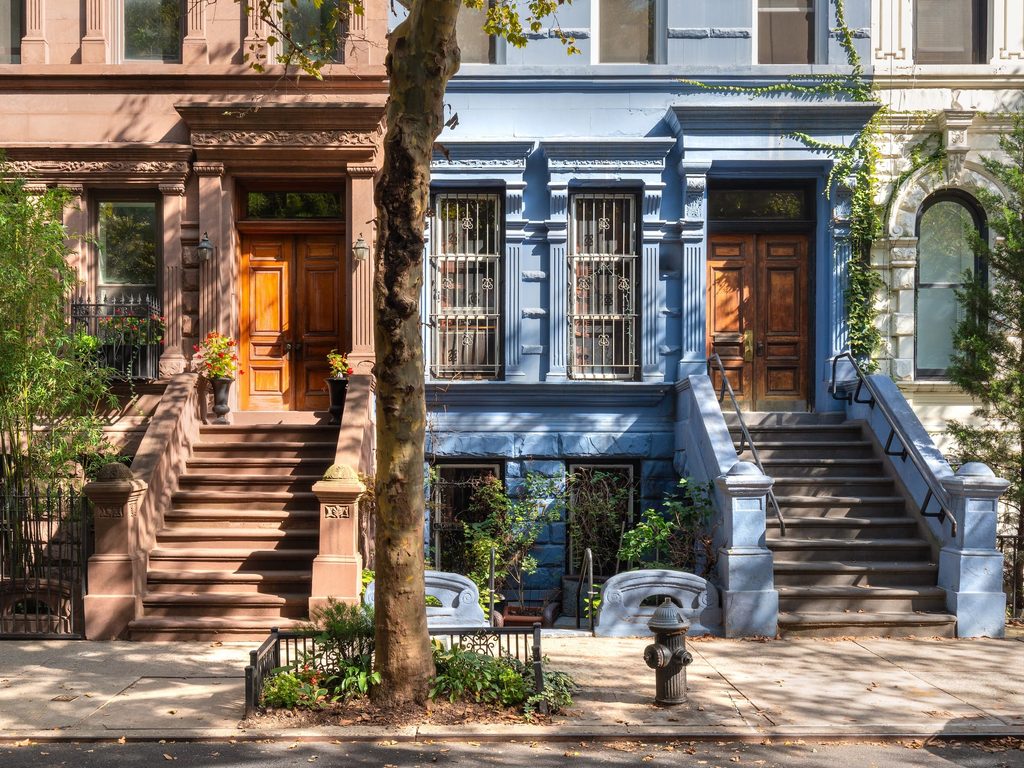
Sitting between Central Park and Riverside Park, the Upper West Side gives you a balance of city life and green space. Lincoln Center anchors the neighborhood’s performing arts scene, and you can try nearly any cuisine within a few blocks.
On Sunday mornings, go for a jog along the Hudson River or browse the farmers’ market on Columbus Avenue, behind the American Museum of Natural History.
Vibe: Historic and authentic
Best for: Culture seekers and music fans
Time to IENYC: 30–45 minutes by subway
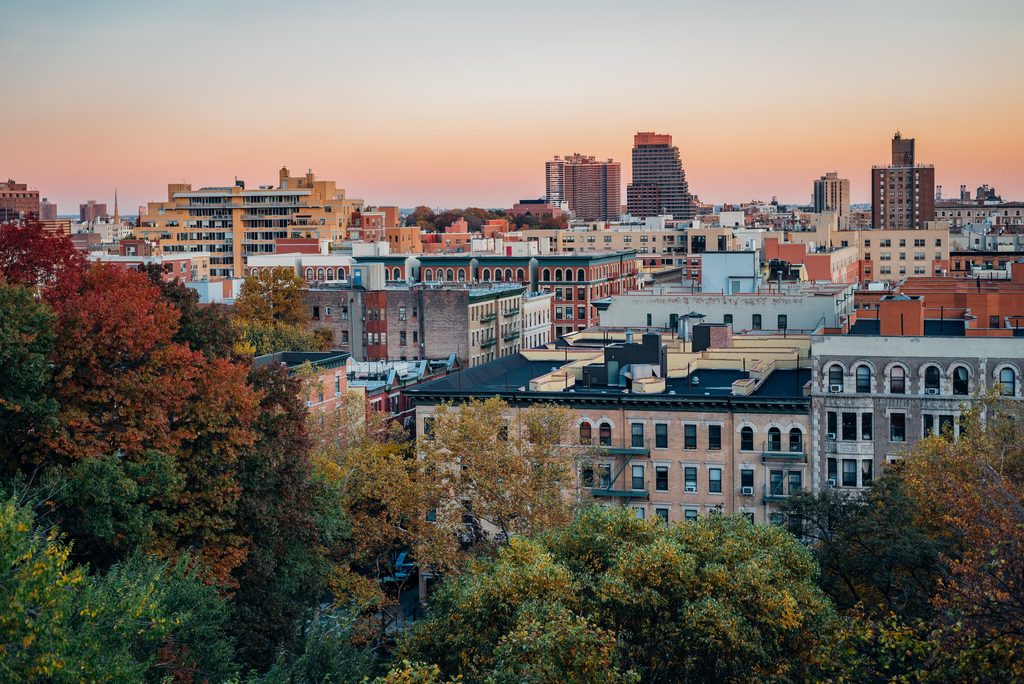
Harlem, in northern Manhattan, has a long history of jazz and literature that still shapes the neighborhood. While it’s changed a lot in recent years, it keeps its character and its iconic cultural institutions, including the Apollo Theater on 125th Street. Rents tend to be lower than in neighborhoods further downtown.
New York’s rental market moves fast. The city’s rental vacancy rate fell to 1.4% in 2023, its lowest level since 1968. Being prepared makes the search less complicated.
Student apartments come and go quickly. Start your search one to two months before your move-in date and be ready to act fast when you find something you like. Having your documents and deposit ready makes the process smoother.
Apartments further out can be cheaper and roomier, but long commutes add up. Whatever neighborhood you’re considering, look for places within a five-minute walk of a subway station. Living nearby also makes it easier to stay downtown after class, whether for a group project or to get work done at a local café.
Look beyond a listing’s photos. Take virtual tours or visit neighborhoods in person if you can. Connect with other students online for honest takes on particular buildings or blocks. Ask about lease terms and utilities before you sign.
At signing, expect to pay the first month’s rent plus a security deposit. Since 2019, New York law has capped the deposit at one month’s rent, and a landlord who takes a deposit can’t also charge last month’s rent in advance.
You may also come across brokers. In New York, a broker is a licensed real estate agent who lists apartments, shows them and handles the paperwork. Renters used to routinely pay brokers a fee on top of rent and deposit. Since June 2025, the FARE Act means you don’t pay that fee when the broker works for the landlord. You’d only pay a broker you choose to hire yourself.
Start with the two things that shape your day most: your budget and your commute. Then visit a shortlist and picture an ordinary weekday there, from the morning coffee run to the train home after class. Wherever you land, you’ll be one subway ride from SoHo.
If you’re planning a move to New York for your master’s, visit IENYC in SoHo and explore the neighborhoods around it while you’re here.
The best NYC neighborhoods for students depend on budget and lifestyle. In Manhattan, the East Village and Chelsea offer walkable streets, plenty of nightlife and easy access to the rest of the city. Williamsburg in Brooklyn and Long Island City and Astoria in Queens usually offer more space for the money, with direct subway lines into Manhattan.
Living in Manhattan, Brooklyn or Queens as a student comes down to location and space. Manhattan neighborhoods like the East Village put students close to the city’s busiest streets, parks and cultural spots. Williamsburg in Brooklyn has a lively young scene, while Queens neighborhoods like Astoria are quieter and more residential, with quick subway rides into Manhattan.
You don’t need a car to live in New York City, and getting around without one is normal here. The subway runs 24 hours a day and buses and short-term bike rentals fill the gaps. NYC Ferry also connects Long Island City, Astoria and Williamsburg to Manhattan across the East River.
The East Village and Williamsburg are two of the best NYC neighborhoods for nightlife. The East Village has small bars and late-night food around St. Marks Place, while Williamsburg has music venues and rooftop bars across the river in Brooklyn. Chelsea adds gallery openings, and Harlem has a long tradition of live jazz.
Astoria is one of the best NYC neighborhoods for food, with Greek tavernas around Ditmars Boulevard and Egyptian and Middle Eastern cafés on Steinway Street. The East Village is known for cheap late-night meals like ramen and dumplings. In Chelsea, Chelsea Market brings dozens of food vendors together under one roof.